






Researchers have used a deep learning artificial intelligence model to find out what they describe as the first biomarker of energy stress that could be immediately seen on commonplace medical photos. The findings are being supplied subsequent week on the annual meeting of the Radiological Society of North America (RSNA).
Energy stress would not merely impact mood. It may have an effect on every bodily and psychological nicely being, contributing to points akin to anxiousness, trouble sleeping, muscle ache, hypertension and a a lot much less environment friendly immune system, consistent with the American Psychological Affiliation. Analysis have moreover linked ongoing stress to important circumstances along with coronary coronary heart sickness, despair and weight issues.
AI measures adrenal glands on routine CT scans
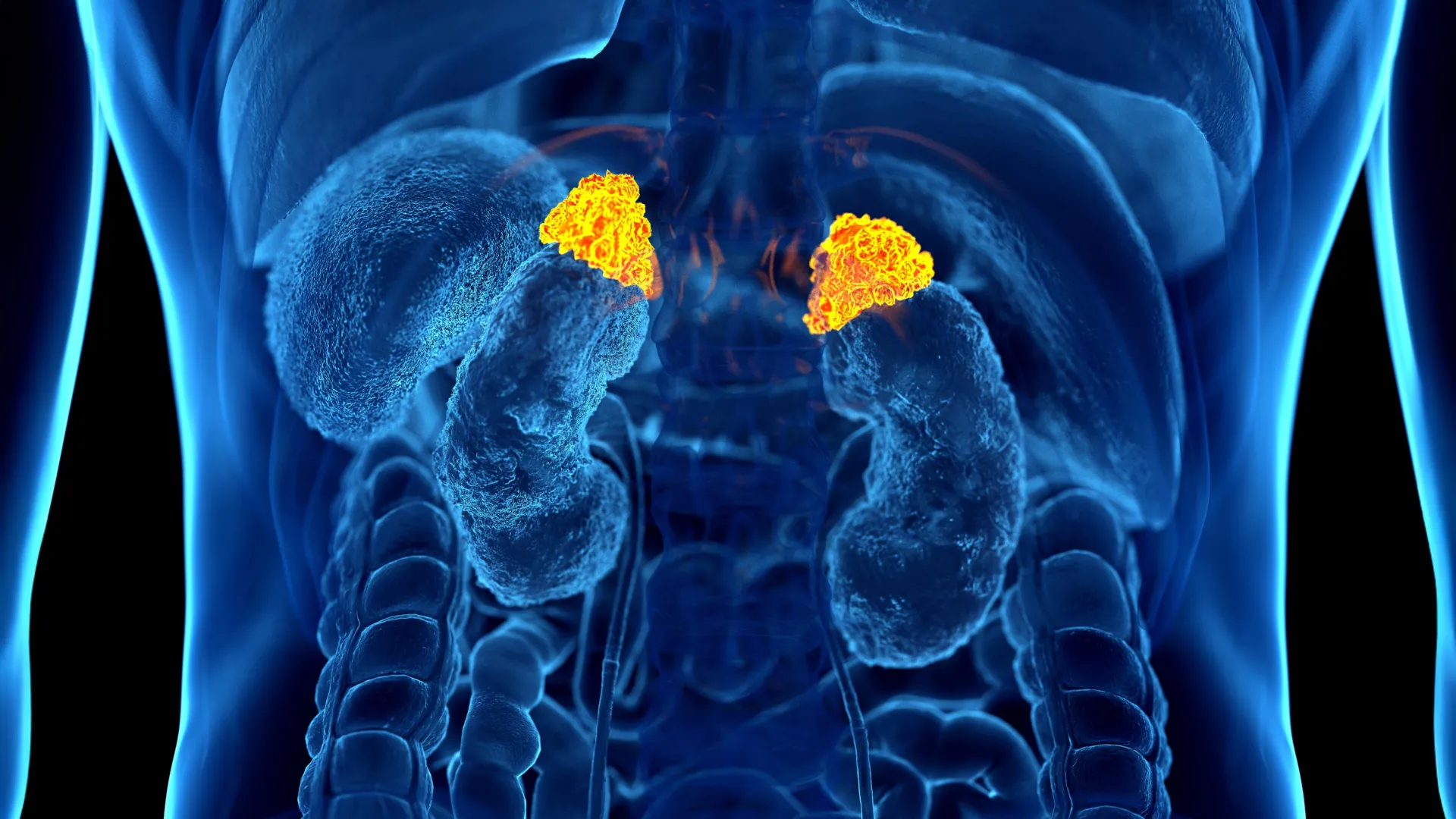
The analysis’s lead creator, Elena Ghotbi, M.D., a postdoctoral evaluation fellow at Johns Hopkins Faculty College of Treatment in Baltimore, Maryland, created and educated a deep learning software program designed to calculate the size of the adrenal glands using CT scans that had already been carried out.
Yearly, tens of hundreds and hundreds of chest CT scans are carried out in america alone.
“Our methodology leverages broadly obtainable imaging information and opens the door to large-scale evaluations of the natural have an effect on of energy stress all through quite a lot of circumstances using current chest CT scans,” Dr. Ghotbi talked about. “This AI-driven biomarker has the potential to bolster cardiovascular hazard stratification and knowledge preventive care with out additional testing or radiation.”
Making the burden of stress seen inside the physique
Senior creator Shadpour Demehri, M.D., professor of radiology at Johns Hopkins, well-known that energy stress is awfully frequent and is one factor many adults experience every day.
“For the first time, we’ll ‘see’ the long-term burden of stress contained within the physique, using a scan that victims already get every day in hospitals all through the nation. Until now, we have not had a method to measure and quantify the cumulative outcomes of energy stress, apart from questionnaires, surrogate serum markers like energy irritation, and cortisol measurement, which may very well be very cumbersome to accumulate.” Dr. Demehri talked about.
Not like a single cortisol examine, which shows stress at just one time restrict, the size of the adrenal glands capabilities additional like a long-term gauge of energy stress.
Large multi-ethnic cohort hyperlinks imaging, hormones and stress load
On this evaluation, the employees analyzed knowledge from 2,842 people (suggest age 69.3; 51% girls) enrolled inside the Multi-Ethnic Analysis of Atherosclerosis, an enormous analysis that mixes chest CT imaging, validated stress questionnaires, cortisol measurements and indicators of allostatic load — the cumulative physiological and psychological outcomes of energy stress on the physique. Because of it integrates imaging, biochemical information and psychosocial assessments within the an identical individuals, this cohort was uniquely suited, and sure the one one obtainable, for creating an imaging-based marker of energy stress.
The investigators utilized their deep learning model to the CT scans to robotically outline and measure adrenal gland amount. They outlined Adrenal Amount Index (AVI) as adrenal amount (cm3) divided by high2 (m2). To grab hormonal patterns, people provided salivary cortisol eight cases per day over the course of two days. Allostatic load was calculated using physique mass index, creatinine, hemoglobin, albumin, glucose, white blood rely, coronary coronary heart cost and blood stress.
Adrenal Amount Index tracks stress, hormones and coronary coronary heart hazard
The employees then examined how AVI related to cortisol, allostatic load and quite a lot of psychosocial stress indicators, akin to despair scores and perceived stress questionnaires. They discovered that AVI generated by the AI model aligned with established stress questionnaires, with circulating cortisol ranges and with future hostile cardiovascular events.
Bigger AVI values have been linked with higher basic cortisol publicity, better peak cortisol ranges and elevated allostatic load. People who reported extreme ranges of perceived stress had better AVI in distinction with those who reported low stress. AVI was moreover associated to a greater left ventricular mass index, a measure related to coronary coronary heart building. For every 1 cm3/m2 improve in AVI, the prospect of coronary coronary heart failure and demise elevated.
“With as a lot as 10-year follow-up information on our people, we’ve got been ready to correlate AI-derived AVI with clinically vital and associated outcomes,” Dr. Ghotbi talked about. “That’s the very first imaging marker of energy stress that has been validated and confirmed to have an unbiased have an effect on on a cardiovascular finish consequence, particularly, coronary coronary heart failure.”
A model new approach to quantify the cumulative have an effect on of stress
“For over three a very long time, we’ve got acknowledged that energy stress can placed on down the physique all through quite a few packages,” talked about Teresa E. Seeman, Ph.D., analysis co-author and professor of epidemiology at UCLA and a pioneering researcher in stress and nicely being. “What makes this work so thrilling is that it hyperlinks a routinely obtained imaging operate, adrenal amount, with validated natural and psychological measures of stress and displays that it independently predicts a severe scientific finish consequence. It’s a true step forward in operationalizing the cumulative have an effect on of stress on nicely being.”
Dr. Demehri outlined that connecting a simple imaging measure with quite a few well-established markers of stress and sickness outcomes creates a model new, smart methodology to measuring energy stress in frequently scientific apply.
“The vital factor significance of this work is that this biomarker is obtainable from CTs which may be carried out broadly in United States for quite a few causes,” Dr. Demehri talked about. “Secondly, it is a physiologically sound measure of adrenal amount, which is part of the facility stress physiologic cascade.”
The researchers well-known that this imaging biomarker could in all probability be utilized to many stress-related sicknesses that usually impact middle-aged and older adults.
Completely different co-authors are Roham Hadidchi, Seyedhouman Seyedekrami, Quincy A. Hathaway, M.D., Ph.D., Michael Bancks, Nikhil Subhas, Matthew J. Budoff, M.D., David A. Bluemke, M.D., Ph.D., R. Graham Barr and Joao A.C. Lima, M.D.

