






With help from artificial intelligence, a world group of scientists has taken a vital early step in direction of creating less complicated defenses in direction of the monkeypox virus (MPXV). This virus could trigger intense ache and, in excessive circumstances, lack of life, with the very best risk to children, pregnant women and people with compromised immune methods. In a analysis revealed in Science Translational Medication, the researchers reported that mice produced sturdy neutralizing antibodies after receiving a viral ground protein acknowledged by means of AI analysis. The result suggests a promising course for future mpox vaccines or antibody cures.
All through 2022, mpox unfold all through many countries and sickened higher than 150,000 people. The illness introduced on flulike indicators along with rashes and lesions, and nearly 500 people died. Effectively being officers relied on smallpox vaccines to protect these most weak, nonetheless these vaccines are costly and difficult to manufacture because of they use a whole, weakened virus.
“In distinction to a whole-virus vaccine that’s large and sophisticated to produce, our innovation is just a single protein that’s simple to make,” talked about Jason McLellan, a professor of molecular biosciences at The School of Texas at Austin and co-lead creator of the analysis.
Determining Extremely efficient Antibodies From Victims
The analysis’s completely different lead authors, Rino Rappuoli and Emanuele Andreano on the Fondazione Biotecnopolo di Siena in Italy, acknowledged 12 antibodies that neutralize MPXV. They found these antibodies by analyzing blood from people who had recovered from the virus or who had beforehand been vaccinated. Although the antibodies have been clear, the crew did not however know which components of the virus they centered.
MPXV reveals many various proteins on its ground, and in any case one among them is essential for spreading an an infection. Quite a lot of the newly discovered antibodies have been recognized to intrude with this course of, nonetheless researchers did not know which ground protein was accountable. To design new cures or vaccines, they wished to seek out out the correct pairing between antibody and viral protein. This key viral operate is named an antigen.
AI Pinpoints a Beforehand Missed Viral Protein
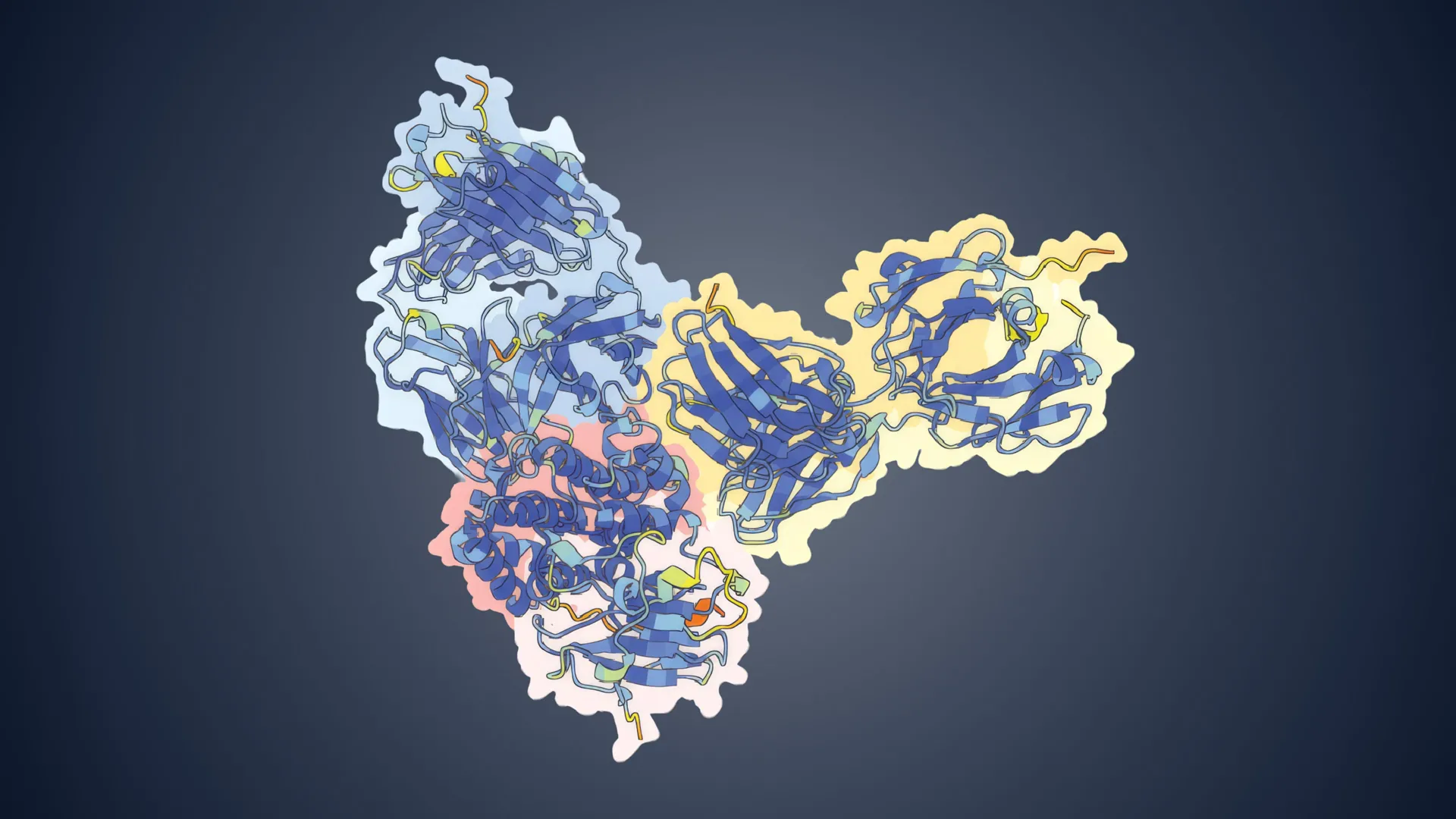
To unravel this puzzle, McLellan’s group used the AlphaFold 3 model to predict which of the roughly 35 viral ground proteins have been susceptible to bind strongly to the patient-derived antibodies. The model acknowledged a protein known as OPG153 with extreme confidence, and laboratory checks confirmed the prediction. This discovering indicated that OPG153 could operate a valuable objective for rising antibody-based therapies or for designing a model new type of vaccine that prompts the immune system to wrestle mpox.
“It would have taken years to hunt out this objective with out AI,” talked about McLellan, who moreover holds the Robert A. Welch Chair in Chemistry and helps lead Texas Biologics, a UT Austin evaluation group focused on therapeutic innovation. “It was truly thrilling because of no one had ever considered it sooner than for vaccine or antibody enchancment. It had on no account been confirmed to be a objective of neutralizing antibodies.”
On account of MPXV is intently related to the virus answerable for smallpox, this discovery would possibly help the creation of improved vaccines or cures for smallpox as successfully, a sickness of concern because of its ease of transmission and extreme mortality price.
In the direction of Subsequent-Know-how Vaccines and Antibody Therapies
The crew is now refining variations of the antigen and antibodies that will very effectively be less complicated, cheap and less complicated to manufacture in distinction with current selections that depend upon weakened poxviruses. Their long-term intention is to test these mpox and smallpox vaccine antigens and antibody cures in individuals. McLellan refers to their method as “reverse vaccinology.”
“We started with people who survived an an infection with monkeypox virus, isolated antibodies that they naturally produced and labored backward to hunt out what part of the virus acted as a result of the antigen for these antibodies. Then we engineered the antigen to elicit comparable antibodies in mice,” McLellan talked about.
UT Austin has filed a patent software program for the utilization of OPG153 (and its derivatives) as a vaccine antigen. The Fondazione Biotecnopolo di Siena has filed a patent software program for antibodies that target OPG153.
Additional UT Austin contributors embody Emily Rundlet, Ling Zhou and Connor Mullins.
Funding help for this work bought right here partly from the Welch Foundation.


