







Scientists have recognized a genetic mechanism that would level to new methods of treating a uncommon however lethal fungal an infection that has pressured a number of hospital intensive care items to close down. The discovering presents early hope towards a pathogen that has been tough to manage and practically not possible to deal with as soon as it spreads.
Candida auris is particularly harmful for people who find themselves already critically unwell, leaving hospitals extremely uncovered to outbreaks. Though the fungus can exist on the pores and skin with out inflicting signs, sufferers who rely upon ventilators face a a lot larger threat. As soon as an infection happens, about 45 % of sufferers die, and the fungus is proof against all main forms of antifungal medicine. This resistance makes therapy extraordinarily difficult and permits the pathogen to persist in hospital wards.
A world well being menace with mysterious origins
The an infection was first detected in 2008, and its origin remains to be unknown. Since then, outbreaks have been reported in additional than 40 nations, together with the UK. Candida auris, additionally known as Candidozyma auris, is now acknowledged as a severe international well being menace and seems on the World Well being Group’s crucial precedence fungal pathogens record. Within the UK, reported instances have continued to rise steadily.
Finding out an infection in a dwelling mannequin
Researchers on the College of Exeter have now taken a significant step ahead by inspecting how genes are activated throughout Candida auris an infection. This marks the primary time such genetic exercise has been studied in a dwelling host utilizing an method based mostly on fish larvae. The research was printed within the Nature portfolio journal Communications Biology and was supported by Wellcome, the Medical Analysis Council (MRC), and the Nationwide Heart for Alternative, Discount and Refinement (NC3Rs).
The researchers say the outcomes may assist establish a organic goal for brand new antifungal remedies and even enable current medicine to be reused, if the identical genetic habits is confirmed throughout an infection in people.
The mission was co-led by NIHR Scientific Lecturer Hugh Gifford of the College of Exeter’s MRC Heart for Medical Mycology (CMM). He mentioned: “Because it emerged, Candida auris has wreaked havoc the place it takes maintain in hospital intensive care items. It may be lethal for weak sufferers, and well being trusts have spent hundreds of thousands on the tough job of eradication. We expect our analysis might have revealed an Achilles heel on this deadly pathogen throughout energetic an infection, and we urgently want extra analysis to discover whether or not we are able to discover medicine that concentrate on and exploit this weak spot.”
Why conventional analysis fashions fell brief
One of many largest obstacles in finding out Candida auris has been its skill to outlive excessive temperatures. When mixed with its unusually robust tolerance for salt, this has led some researchers to counsel it could have originated in tropical oceans or marine animals. These traits additionally made it tough to review utilizing standard laboratory fashions.
To beat this, the Exeter workforce developed a brand new an infection mannequin utilizing Arabian killifish. The eggs of this species can survive at temperatures just like the human physique, making them appropriate for observing an infection in circumstances that carefully resemble actual sickness.
Genetic exercise reveals potential vulnerabilities
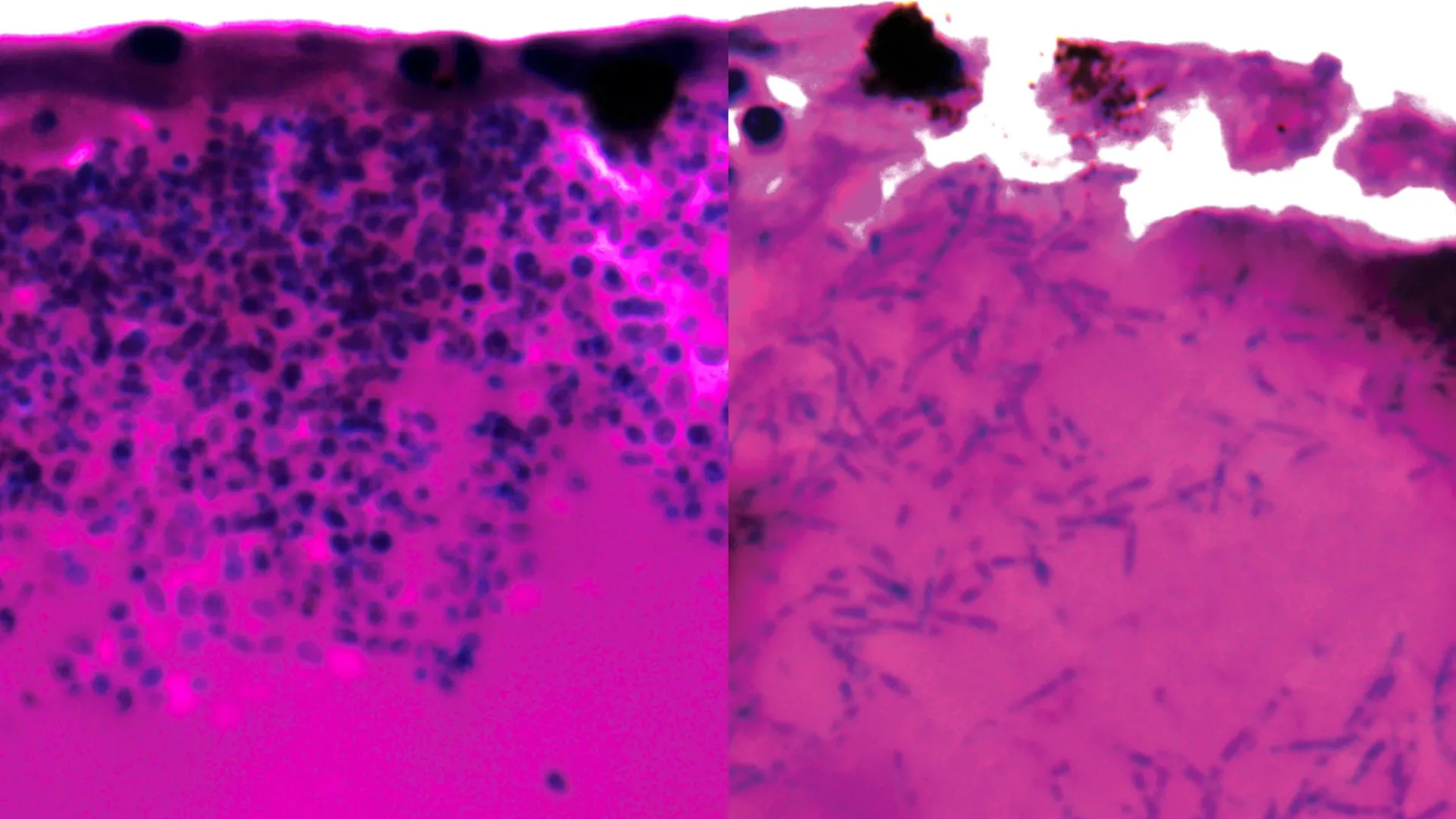
In the course of the experiments, researchers noticed that Candida auris can change its form by forming elongated fungal buildings often known as filaments. These buildings might assist the fungus seek for vitamins whereas infecting a bunch.
The workforce additionally analyzed which genes had been activated or switched off throughout an infection to establish potential weak factors. A number of of the genes that turned energetic are answerable for producing nutrient pumps that seize iron-scavenging molecules and transport iron into fungal cells. As a result of iron is crucial for survival, this course of might symbolize a crucial vulnerability.
Co-senior writer Dr. Rhys Farrer of the College of Exeter’s MRC Centre for Medical Mycology mentioned: “Till now, we have had no concept what genes are energetic throughout an infection of a dwelling host. We now want to search out out if this additionally happens throughout human an infection. The truth that we discovered genes are activated to scavenge iron offers clues to the place Candida auris might originate, equivalent to an iron-poor setting within the sea. It additionally offers us a possible goal for brand new and already current medicine.”
Hope for future remedies
Dr. Gifford, who additionally works as a resident doctor in intensive care and respiratory medication on the Royal Devon & Exeter Hospital, emphasised the medical significance of the findings. He mentioned: “Whereas there are a selection of analysis steps to undergo but, our discovering may very well be an thrilling prospect for future therapy. We’ve medicine that concentrate on iron scavenging actions. We now have to discover whether or not they may very well be repurposed to cease Candida auris from killing people and shutting down hospital intensive care items.”
The Arabian killifish larvae mannequin was developed with assist from an NC3Rs mission grant as an alternative choice to utilizing mouse and zebrafish fashions, that are generally used to review interactions between pathogens and their hosts. Dr. Katie Bates, NC3Rs Head of Analysis Funding, mentioned: “This new publication demonstrates the utility of the alternative mannequin to review Candida auris an infection and allow unprecedented insights into mobile and molecular occasions in stay contaminated hosts. It is a good instance of how modern various approaches can overcome key limitations of conventional animal research.”
The paper is titled ‘Xenosiderophore transporter gene expression and clade-specific filamentation in Candida auris killifish (Aphanius dispar) an infection’ and is printed within the Nature portfolio journal Communications Biology.