





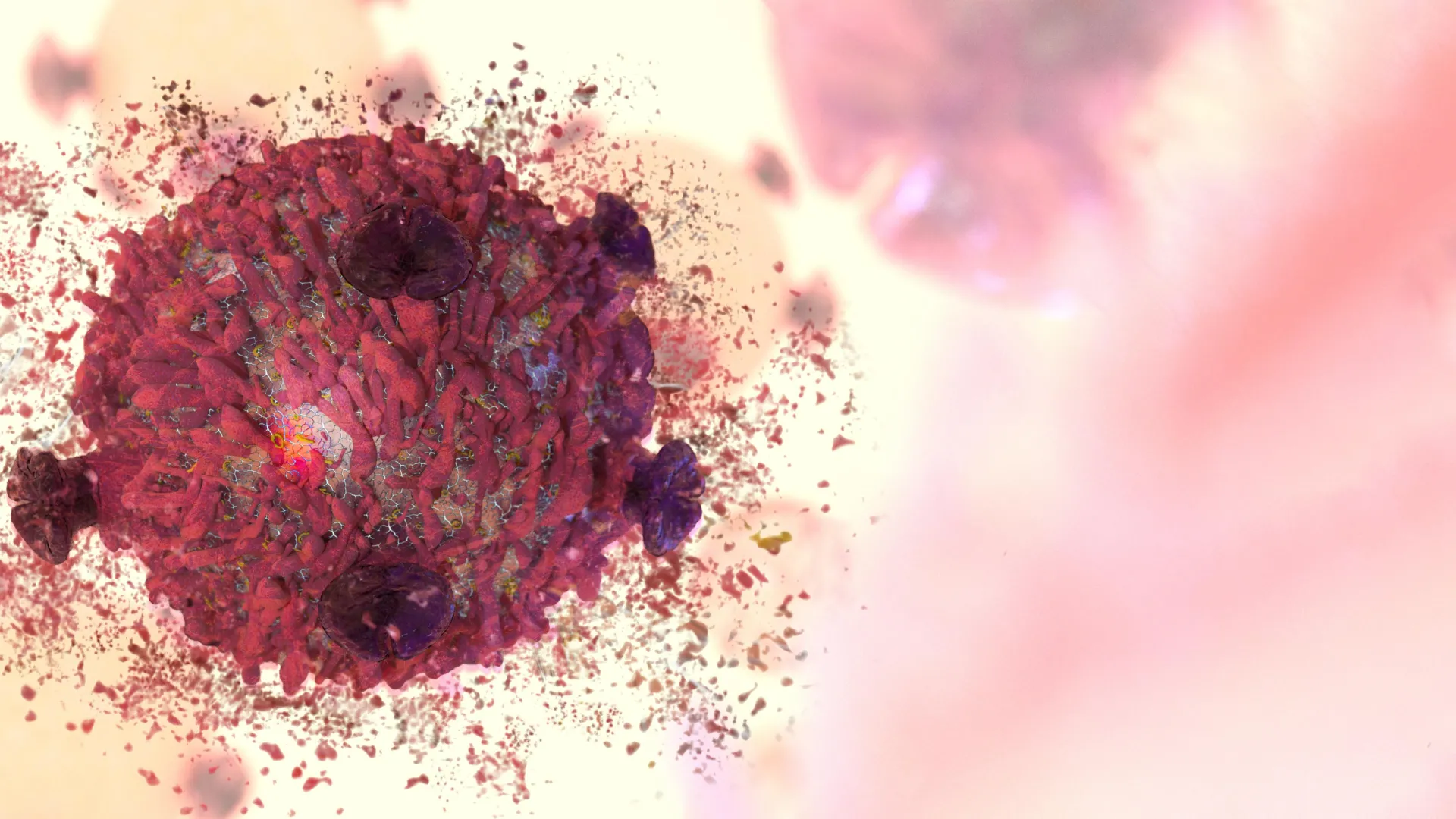
Researchers led by RMIT College have developed extraordinarily small particles referred to as nanodots that may destroy most cancers cells whereas largely leaving wholesome cells unhurt. The particles are constituted of a metal-based compound and signify a potential new path for most cancers therapy analysis.
The work continues to be in its early phases and has solely been examined in laboratory-grown cells. It has not but been studied in animals or people. Even so, the findings recommend a promising technique that takes benefit of vulnerabilities already current in most cancers cells.
A Metallic Compound With Uncommon Properties
The nanodots are created from molybdenum oxide, a compound derived from molybdenum. This uncommon metallic is often utilized in electronics and industrial alloys.
In response to the examine’s lead researcher Professor Jian Zhen Ou and Dr. Baoyue Zhang from RMIT’s Faculty of Engineering, small modifications to the chemical construction of the particles brought about them to launch reactive oxygen molecules. These unstable oxygen types can injury important cell elements and in the end set off cell demise.
Lab Assessments Present Sturdy Most cancers Selectivity
In laboratory experiments, the nanodots killed cervical most cancers cells at thrice the speed seen in wholesome cells over a 24-hour interval. Notably, the particles labored with out requiring gentle activation, which is rare for related applied sciences.
“Most cancers cells already stay beneath greater stress than wholesome ones,” Zhang mentioned.
“Our particles push that stress a little bit additional — sufficient to set off self-destruction in most cancers cells, whereas wholesome cells cope simply nice.”
Worldwide Collaboration Behind the Analysis
The analysis concerned scientists from a number of establishments. Contributors included Dr. Shwathy Ramesan from The Florey Institute of Neuroscience and Psychological Well being in Melbourne, in addition to researchers from Southeast College, Hong Kong Baptist College, and Xidian College in China. The work was supported by the ARC Centre of Excellence in Optical Microcombs (COMBS).
“The consequence was particles that generate oxidative stress selectively in most cancers cells beneath lab situations,” she mentioned.
How the Nanodots Set off Cell Dying
To create the impact, the workforce fastidiously adjusted the composition of the metallic oxide by including very small quantities of hydrogen and ammonium.
This exact tuning altered how the particles managed electrons, permitting them to supply greater ranges of reactive oxygen molecules. These molecules push most cancers cells into apoptosis — the physique’s pure course of for safely eradicating broken or malfunctioning cells.
In a separate experiment, the identical nanodots broke down a blue dye by 90 % in simply 20 minutes, demonstrating how highly effective their chemical reactions might be even in full darkness.
A Path Towards Gentler Most cancers Remedies
Many current most cancers therapies injury wholesome tissue together with tumors. Applied sciences that may selectively enhance stress inside most cancers cells could result in therapies which might be extra focused and fewer dangerous.
As a result of the nanodots are constituted of a extensively used metallic oxide relatively than pricey or poisonous noble metals reminiscent of gold or silver, they could even be extra inexpensive and safer to fabricate.
Subsequent Steps Towards Actual-World Use
The COMBS analysis workforce at RMIT is constant to advance the expertise. Deliberate subsequent steps embody:
- Focusing on supply methods so the particles activate solely inside tumors.
- Controlling launch of reactive oxygen species to keep away from injury to wholesome tissue.
- In search of partnerships with biotech or pharmaceutical firms to check the particles in animal fashions and develop scalable manufacturing strategies.
Organizations taken with collaborating with RMIT researchers can contact: [email protected]