





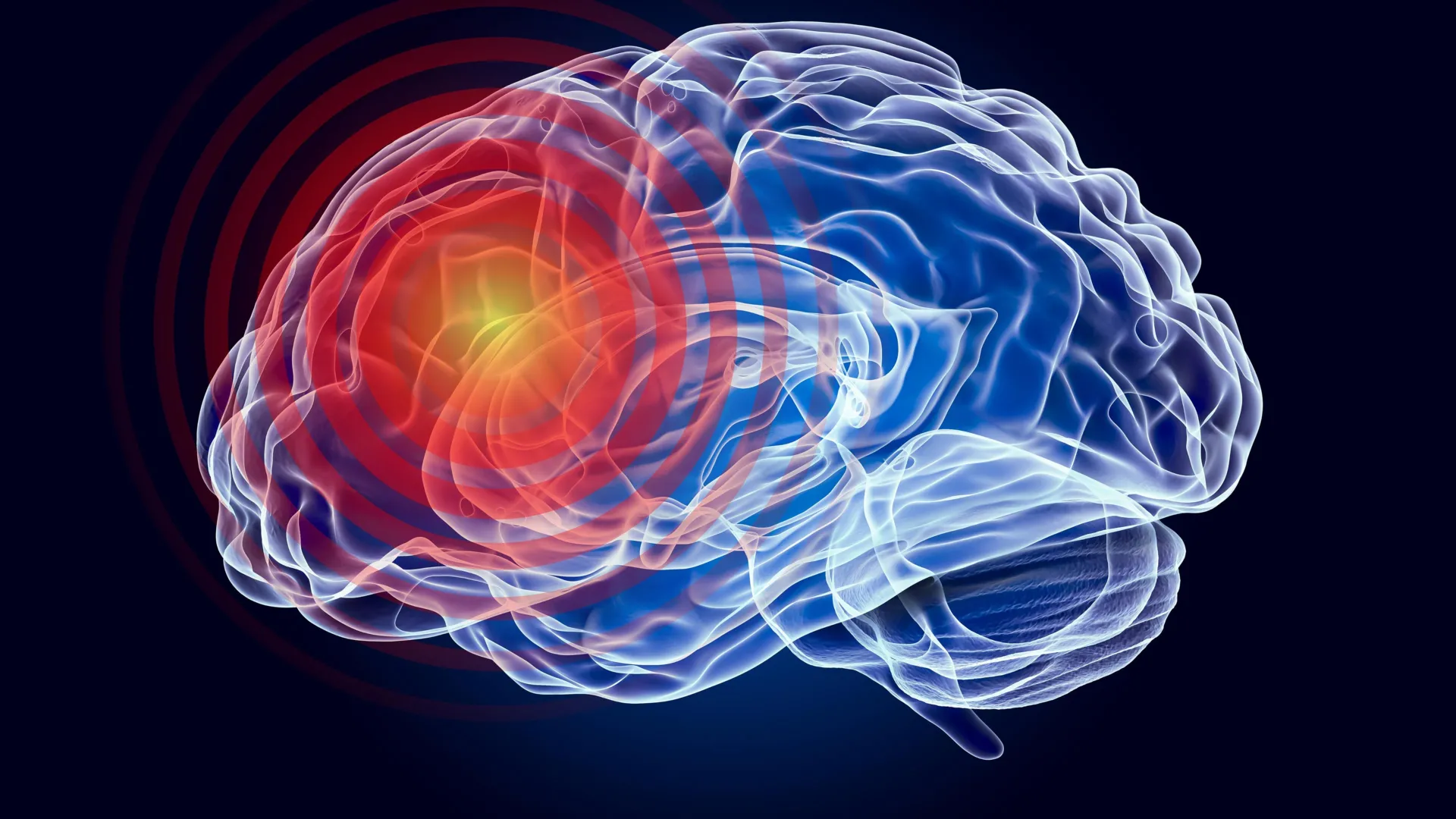
A world analysis group led by the corporate Aivocode, working with scientists from the Institute for Superior Chemistry of Catalonia (IQAC) of the Spanish Nationwide Analysis Council (CSIC), reviews {that a} small compound has a robust protecting impact in mouse fashions of traumatic mind damage. The compound is a peptide constituted of 4 amino acids referred to as CAQK.
In animal assessments (mice and pigs), researchers gave CAQK by an IV quickly after damage. The peptide was drawn to broken elements of the mind as a result of it’s drawn to a protein that turns into unusually plentiful in injured tissue after trauma. CAQK constructed up the place this protein was concentrated and helped cut back irritation, cell dying, and hurt to mind tissue. In mice, the remedy additionally improved purposeful restoration and confirmed no apparent toxicity.
Examine particulars and plans for human trials
The findings have been printed in EMBO Molecular Drugs and level to new methods to deal with injured mind areas. The work was led by Aivocode (a spin-off of the Sanford Burnham Prebys Institute) in San Diego, California, in partnership with IQAC-CSIC and the College of California, Davis.
Aivocode was based by researchers Aman P. Mann, Sazid Hussain, and Erkki Ruoslahti (authors of the research). The corporate says it plans to hunt permission from the U.S. Meals and Drug Administration (FDA) to start Part I medical trials in people. No timeline has been introduced, however CAQK’s small dimension issues as a result of it’s a quick peptide that’s simpler to fabricate and may penetrate tissue properly, making it a promising drug candidate.
Traumatic mind damage and the shortage of accepted medication
Traumatic mind damage (TBI) often occurs after a blow to the pinnacle, together with accidents from visitors crashes, office accidents, or falls. It’s estimated to have an effect on round 200 individuals per 100,000 inhabitants every year. At this time’s care focuses on preserving sufferers secure by reducing intracranial stress and preserving blood stream, but there aren’t any accepted medicines that cease the mind harm itself or the secondary cascade that follows, together with irritation and cell dying. Some experimental approaches additionally require direct injections into the mind, which is invasive and may result in problems.
“The present interventions for treating acute mind damage goal to stabilize the affected person by decreasing intracranial stress and sustaining blood stream, however there aren’t any accepted medication to cease the harm and secondary results of those accidents,” explains Dr. Pablo Scodeller, researcher at IQAC-CSIC and co-author of the research.
A non-invasive strategy and a key hyperlink to earlier analysis
Creating a non-invasive remedy for an injured mind stays one among neurology’s greatest challenges. This research builds on earlier analysis from 2016 that was printed in Nature Communications.
In that earlier work, researcher Aman P. Mann and Pablo Scodeller, working in Dr. Ruoslahti’s lab at Sanford Burnham Prebys (senior writer of each research), recognized a peptide that would residence in on injured areas of the mouse mind. The peptide, CAQK, was discovered utilizing peptide-phage show, a large-scale screening technique that helps researchers choose molecules that bind to particular tissues. On the time, CAQK served primarily as a “car” to hold medication on to the injured area. The brand new research exhibits one thing extra, that CAQK itself can have therapeutic results.
How CAQK targets broken tissue in mice and pigs
To check whether or not CAQK may work as a remedy, the group administered it intravenously quickly after a reasonable or extreme traumatic mind damage. They then noticed the peptide accumulate in injured mind tissue in each mice and pigs (the latter having brains extra much like people than mice). The researchers additionally discovered that CAQK binds to glycoproteins (proteins hooked up to sugars), which improve after damage and are a part of the extracellular matrix — a supportive construction that surrounds mind cells.
When mice with traumatic mind damage obtained CAQK, their lesion sizes have been smaller than these in management mice. “We noticed much less cell dying and decrease expression of inflammatory markers within the injured space, indicating that CAQK alleviated neuroinflammation and its secondary results. Behavioral and reminiscence assessments carried out after remedy additionally confirmed enchancment in purposeful deficits, with no evident toxicity,” explains the research’s first writer, Dr. Mann.
The outcomes recommend that CAQK can help restore in broken mind tissue and will have therapeutic worth after trauma. “What’s thrilling is that, along with proving extremely efficient, it is a quite simple compound — a brief peptide that’s simple to synthesize safely at massive scale. Peptides with these traits present good tissue penetration and are non-immunogenic,” concludes Scodeller.


